
Author: Sharif Mohammed Sadat, Regional Director for Asia-Pacific Ad Interim
Editor: Leonard Octo Wangsa (PR & Communication Regional Assistant for Asia-Pacific), Aufa Fathya (Vice-President for PR & Communication)
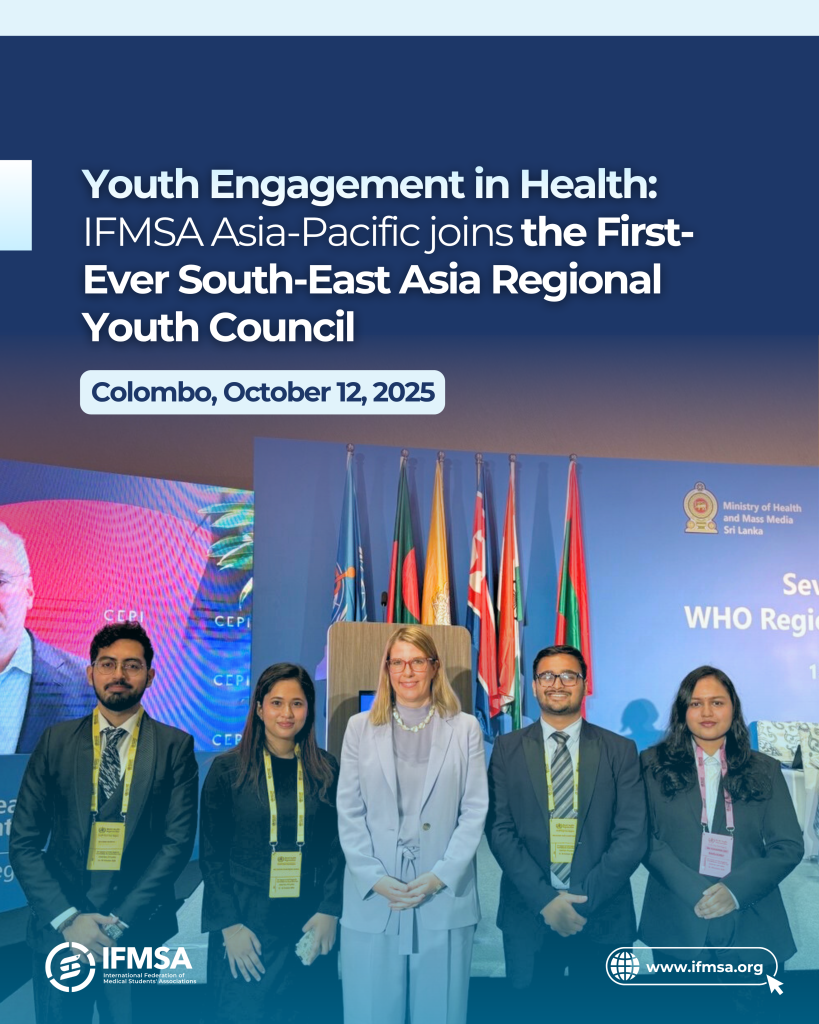
 Colombo, October 12, 2025
The World Health Organization (WHO) South-East Asia Regional Office (SEARO) officially launched the first-ever WHO South-East Asia Regional Youth Council (SEAR YC) on Sunday in Colombo. The event marked a historic milestone in ensuring that young people’s voices are meaningfully represented in health policy and governance across one of the world’s most populous regions.
The launch, held as a pre-Regional Committee side event ahead of the 78th Session of the WHO South-East Asia Regional Committee Meeting (RCM), brought together high-level delegates, WHO leadership, youth representatives, and development partners. The Council aims to institutionalize youth participation in health systems, advancing Universal Health Coverage (UHC) and the Sustainable Development Goals (SDGs) through youth-led advocacy, research, and innovation.
Delivering the keynote address, Dr. Catharina Boehme, the Officer-in-Charge of WHO SEARO, emphasized the critical role of young people in shaping the region’s health future: “Our region is home to the largest generation of young people in the world. You are the present, and you are the future. This Youth Council marks a milestone for WHO South-East Asia in making youth engagement in health tangible and meaningful.”
The WHO SEAR Youth Council comprises nine members representing eight countries, which include Bangladesh, Bhutan, India, Maldives, Nepal, Sri Lanka, Thailand, and Timor-Leste along with one regional organization, the International Federation of Medical Students’ Associations (IFMSA Asia-Pacific).
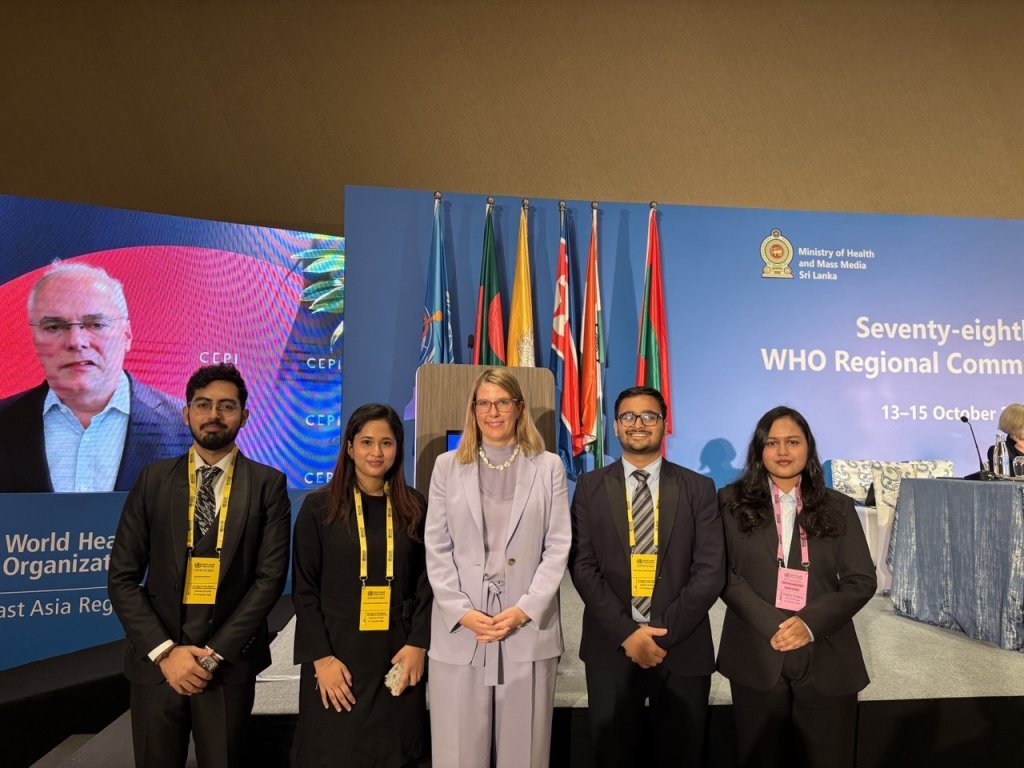
Representing IFMSA Asia-Pacific, Sharif Mohammed Sadat, IFMSA’s Regional Director for Asia-Pacific, was appointed as the only Regional Representative of the Council, representing over a million medical students and youth advocates across the region. His appointment highlights the role of medical students and youth advocates from the Asia-Pacific region in global health leadership and governance.
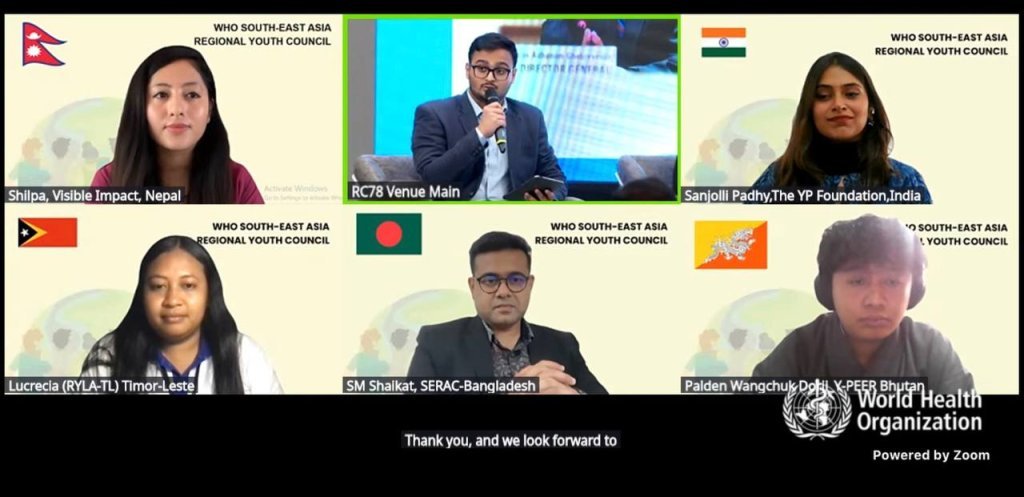
At the launch, Sadat delivered the Council’s “Way Forward” statement reaffirming the Council’s commitment to action and accountability: “Over the next two years, the WHO SEAR Youth Council will transform commitments into tangible results, from better mental well-being to safer schools and stronger protections against harmful practices. Our generation is ready to lead with innovation, empathy, and collaboration. This Council is not the end of our journey; it is where it begins. Together, we will turn ideas into action, ensuring that youth voices are not only heard but also translated into meaningful health policies across the region.”

Opening remarks were delivered by Dr. Chandima Siritunga, Director of the Family Health Bureau, and Dr. Asela Gunawardena, Director General of Health Services, both from the Ministry of Health, Sri Lanka. The event concluded with closing reflections from Dr. Chiranthika Vithana, Consultant Community Physician and National Programme Manager for Adolescent and Youth Health.
The Council’s formation follows a rigorous regional selection process, during which 64 youth-led organizations applied and 39 were deemed eligible. Nine were ultimately chosen as primary members. By formalizing youth engagement at the regional level, the WHO SEAR Youth Council represents a powerful step toward inclusive, intergenerational governance.
In a symbolic moment at the launch, participants collectively selected the Council’s official tagline: “Empowering Youth Voices, Shaping Healthy Futures.”
The launch highlighted a shared vision for a healthier and more equitable South-East Asia, where young people are not just beneficiaries of policy but co-creators of change — with medical students and youth leaders like Sharif Mohammed Sadat playing a central role on the global stage.

